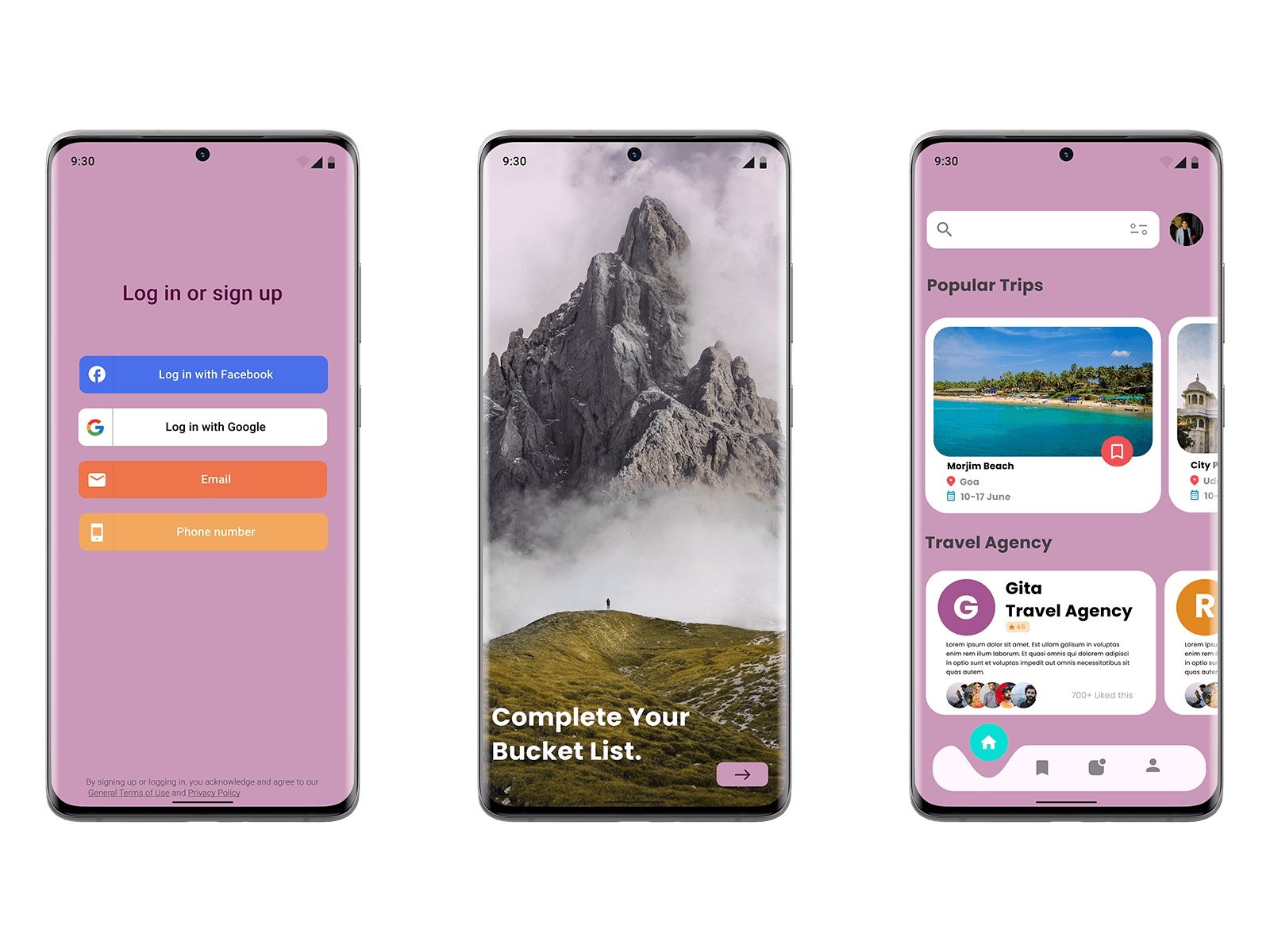
Travel App
A travel agency app is a mobile application that allows users to plan, book, and manage their travel experiences conveniently and efficiently. It offers features such as destination research, flight and hotel bookings, itinerary planning and management, travel insurance and safety features, and social features. Users can easily search for and book flights and hotel accommodations, plan and organize their itineraries, access safety and security information, and connect with other travellers through the app's social features.

For the detailed Case Study please visit this Behance link - https://www.behance.net/gallery/173072877/Travel-App-Case-Study
Problem Statement
Travelling may be a difficult and stressful experience, with several duties to do such as booking flights and hotels, arranging activities, and handling travel logistics.
Travellers need to visit various websites and platforms, performing time-consuming searches for the best bargains and possibilities which can result in confusion and indecisiveness.
Furthermore, travellers may have difficulty finding credible and trustworthy information about their location, especially safety and security issues.
Goals
The solution for the above problem of the travel agency app could be a comprehensive, user-friendly, and mobile-based application that can cater to all the needs of travellers.
The app could have features such as Easy booking process, Itinerary planning and management, Destination information, Social features, Personalization.
Design Process
Designing a travel agency app involves several stages and considerations. Here's a high-level overview of the design process:
Define the Objectives and Target Audience:
Identify the primary goals and objectives of the travel agency app. This could include features like booking flights, hotels, car rentals, tour packages, or providing travel information.
Determine the target audience for the app, such as business travelers, families, adventure enthusiasts, or budget-conscious travelers. Understanding the users' needs and preferences is crucial for designing a user-centric app.
Conduct User Research:
Perform market research to understand user expectations, pain points, and existing competitors in the travel industry.
Conduct user interviews, surveys, and usability tests to gather insights into user preferences, behaviors, and pain points related to travel planning and booking.
Create User Personas:
Based on the research, develop user personas representing different types of travelers. These personas help design for specific user needs and make informed decisions throughout the design process.
Define User Flows and Information Architecture:
Map out the user flows, from the initial app launch to completing various tasks such as flight booking, hotel reservations, or exploring travel destinations.
Design an intuitive information architecture that organizes the app's content in a logical and easily navigable manner. Consider using card sorting or other usability techniques to refine the information structure.
Sketch and Wireframe:
Begin the visual design process by sketching rough ideas and concepts for key screens and interactions.
Create low-fidelity wireframes to define the app's layout, screen hierarchy, and interaction flow. Focus on key features and user flows to ensure clarity and ease of use.
Visual Design:
Develop the visual design language, including color schemes, typography, and iconography, to create a visually appealing and consistent app interface.
Design high-fidelity mockups of the app screens, ensuring a responsive and adaptive design for different devices and screen sizes.